
Zobrazují se příspěvky se štítkemGermany. Zobrazit všechny příspěvky
Zobrazují se příspěvky se štítkemGermany. Zobrazit všechny příspěvky
středa 7. března 2018
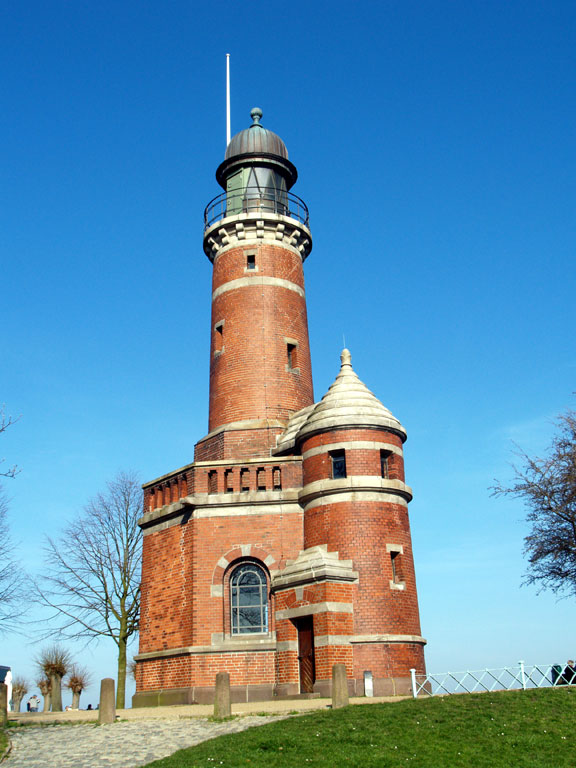
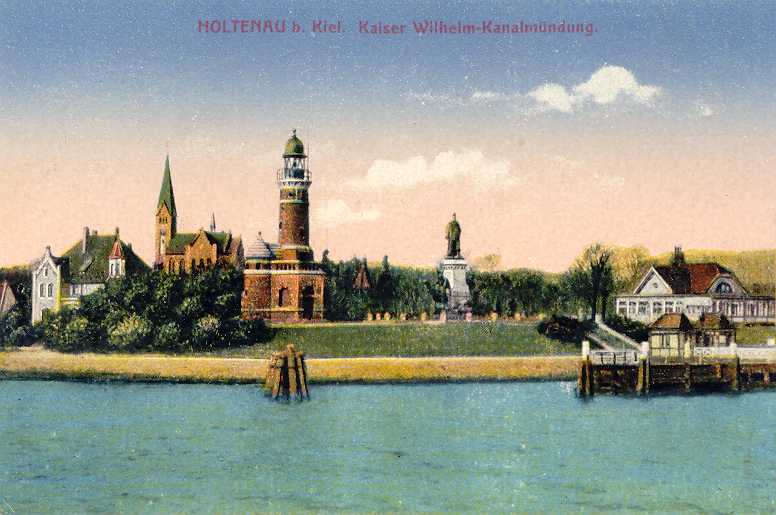
Germany - Holtenau Lioghthouse

úterý 16. ledna 2018
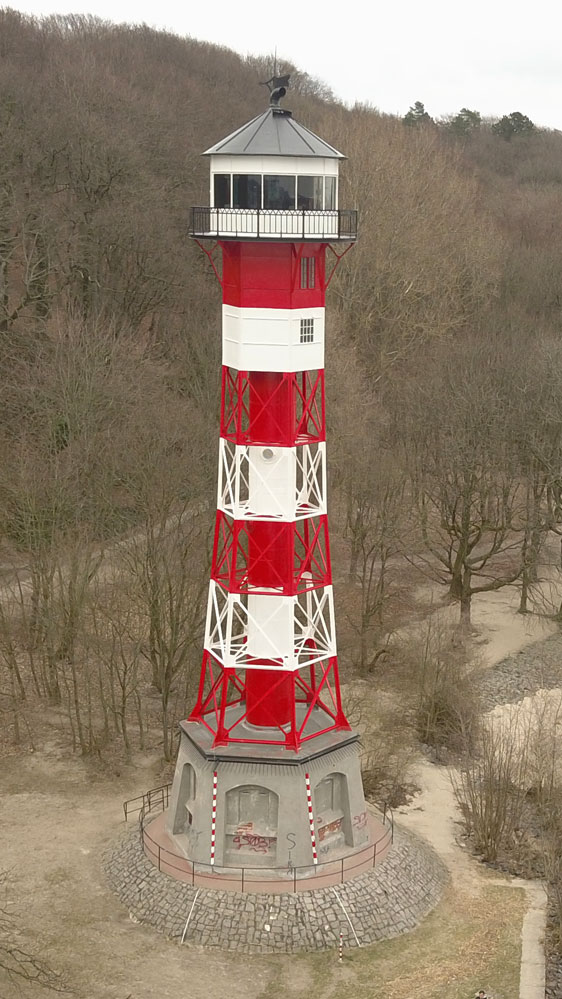
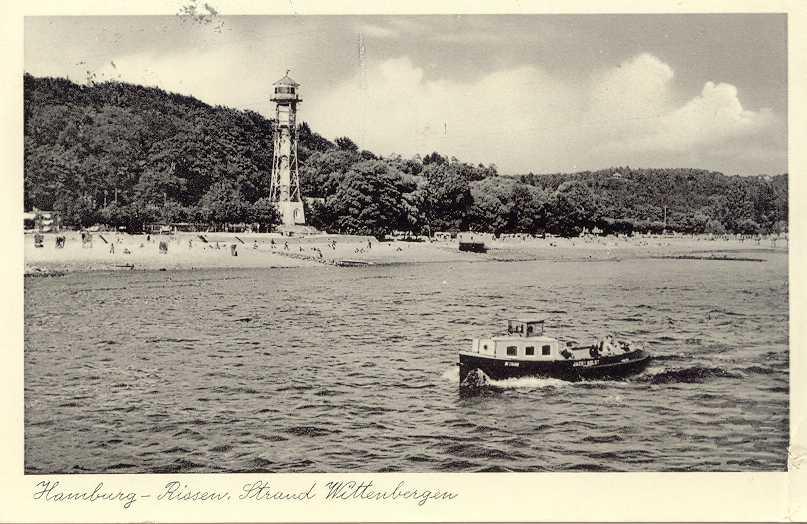
Germany - Wittenbergen Lighthouse
1900. Active; focal plane 30 m (98 ft); white light 4 s on, 4 s off, synchronized with the rear light. 30 m (98 ft) hexagonal skeletal tower with a large circular lantern and gallery, enclosed 2-story watch room, and central cylinder. Lighthouse painted with red and white horizontal bands, lantern white with a black roof, gallery railing black. A photo is at right, Werning has a good photo, Trabas has a closeup photo by Wolfgang Warncke, a 2009 photo is available, Wikimedia has additional photos, Huelse has a historic postcard view, Ingo Maack has a closeup street view, and Google has a satellite view. This is the front light of a downstream (westbound) range marking the channel for ships leaving Hamburg. The initial placement of the tower was incorrect, so it was moved 8 m (26 ft) south in 1905. The lighthouse was restored and modernized in 1979. Located on the north bank of the Elbe at Wittenbergen; Site open, tower closed.


úterý 2. května 2017
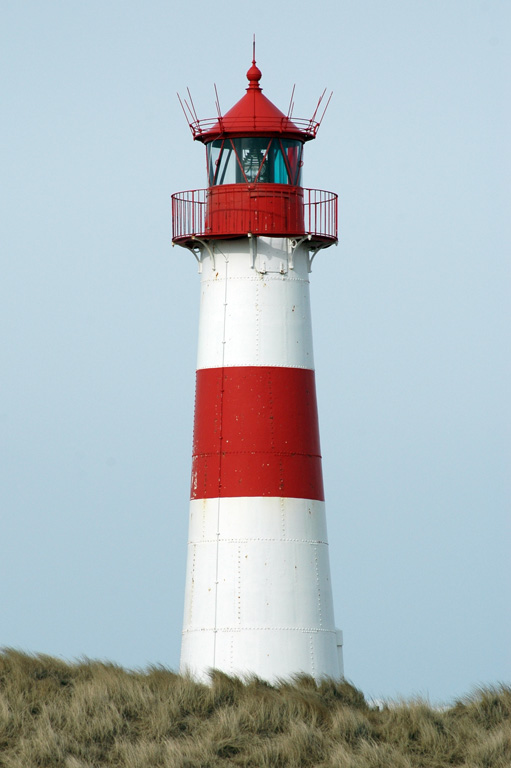
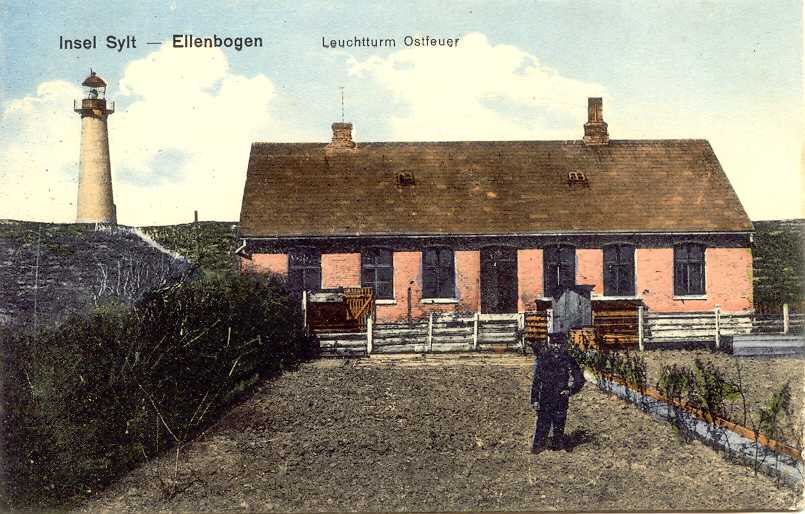
Germany - Lighthouse List-Ost on Sylt


středa 21. prosince 2016
Germany - Nord See
1. The Rotes Kliff lighthouse on the island of Sylt, Germany, served as a sector light from 1913 to 1975. It is located on a cliffside north of the village of Kampen.
The lighthouse was built between 1912 and 1913 as a sector light to warn ships of a sand bank in the approach to the Lister Tief nautical channel and to have a supplement to the main light at Kampen, 2.5 kilometres to the south. It became operational in 1913 and was electrified in 1936. Until its deactivation in 1975 it was maintained by the keepers of the Kampen lighthouse. When Rotes Kliff was extinguished, the main light at Kampen took over its part with a red section of light. Today the tower serves as a daymark without any lighting facility and is owned by the Kampen municipality who financed a restoration of the tower in 1993.
2. Büsum Lighthouse (German: Leuchtturm Büsum) is an active 20th century lighthouse located in Büsum a fishing and tourist town, which lies on North Sea coast of Schleswig-Holstein, in Germany.
The first lighthouse built in 1878 was simply a lantern mounted on a wooden post, which was fuelled by kerosene. A replica of this early aid to navigation, exists next to the local museum

The lighthouse was built between 1912 and 1913 as a sector light to warn ships of a sand bank in the approach to the Lister Tief nautical channel and to have a supplement to the main light at Kampen, 2.5 kilometres to the south. It became operational in 1913 and was electrified in 1936. Until its deactivation in 1975 it was maintained by the keepers of the Kampen lighthouse. When Rotes Kliff was extinguished, the main light at Kampen took over its part with a red section of light. Today the tower serves as a daymark without any lighting facility and is owned by the Kampen municipality who financed a restoration of the tower in 1993.
2. Büsum Lighthouse (German: Leuchtturm Büsum) is an active 20th century lighthouse located in Büsum a fishing and tourist town, which lies on North Sea coast of Schleswig-Holstein, in Germany.
The first lighthouse built in 1878 was simply a lantern mounted on a wooden post, which was fuelled by kerosene. A replica of this early aid to navigation, exists next to the local museum
| Year first lit | 1913 |
|---|---|
| Height | 21.4 metres (70 ft) |
| Focal height | 22 metres (72 ft) |
| Range | 19 nautical miles (35 km; 22 mi) |
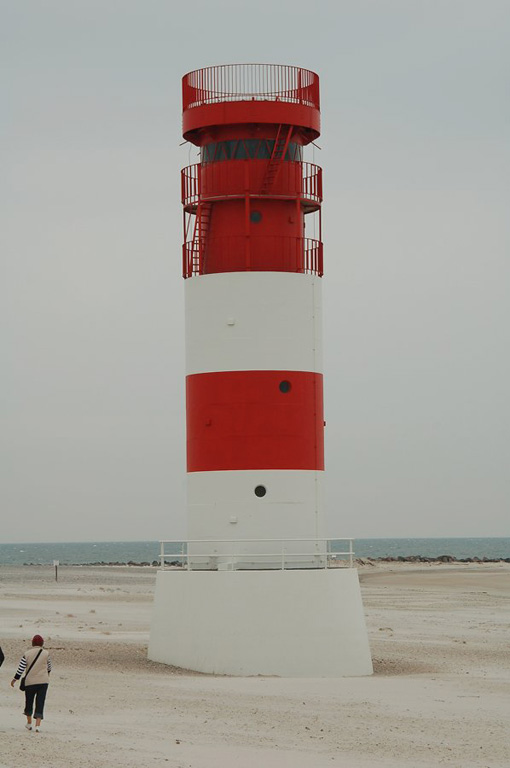
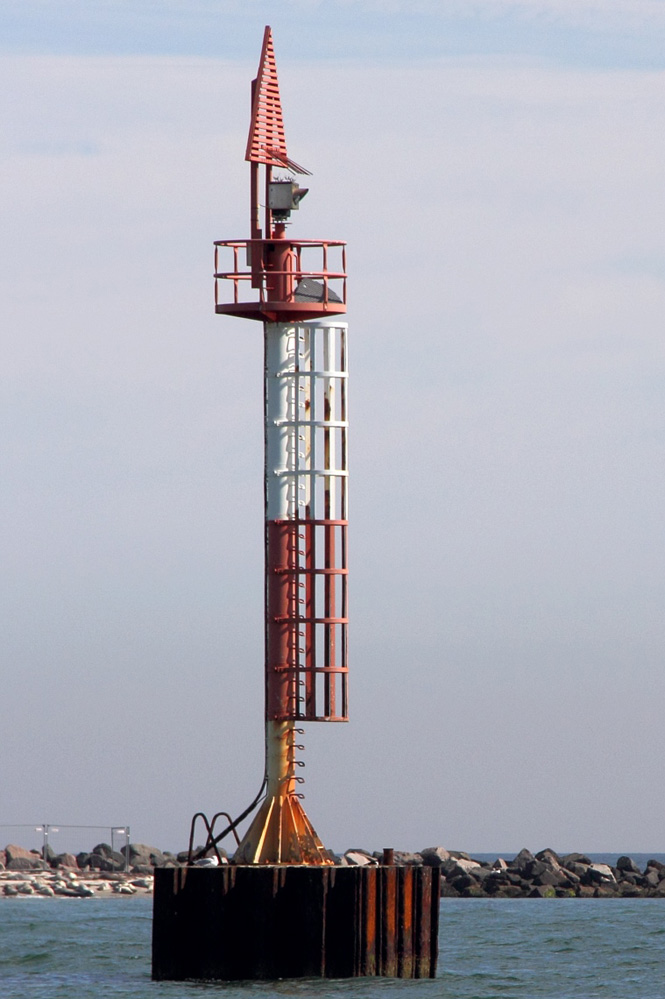
3. Lighthouse Helgoland - Düne - 1936 (station established 1899). Active; focal plane 17 m (56 ft); white, red, or green light, depending on direction, 2 s on, 2 s off, synchronized with the front light. 15 m (49 ft) round cylindrical steel tower with lantern, mounted on a circular concrete base. Lighthouse painted with red and white horizontal bands. Leuchtturm-Atlas has a good closeup photo, Trabas has a photo by Joke Reijnen, Werning also has a good photo, and Google has a satellite view. The lighthouse was built from prefabricated segments. The range light is shown to the south southwest, and a directional light is also shown to the northeast; both lines guide ships bound for the harbor on the Hauptinsel. The range front light is on a simple post. Located 120 m (130 yd) behind the front light, on the beach on the south side of Düne. Site open, tower closed. Operator: WSA Tönning. ARLHS FED-103; Admiralty B1326.1; NGA 10152.
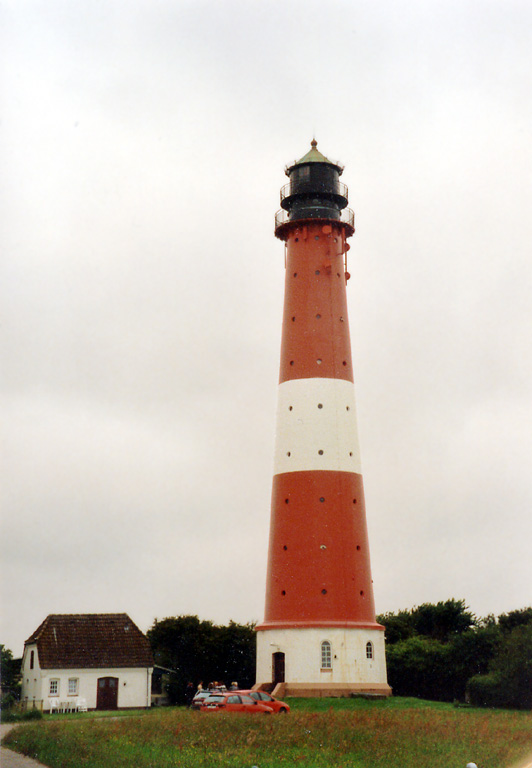
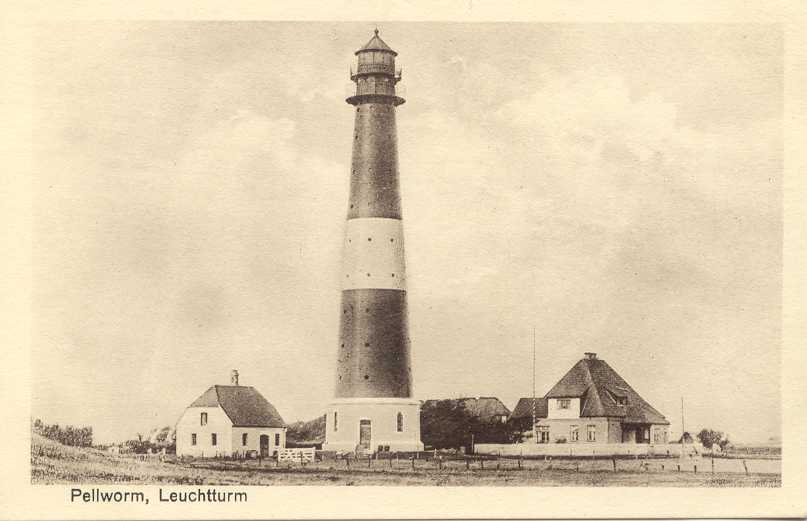
4. Pellworm - 1907. Active; focal plane 38 m (125 ft); white or red light, depending on direction, occulting once every 5 s. 41 m (135 ft) round cast iron tower with lantern and double gallery, mounted on a 1-story concrete base. Lighthouse painted red with one white horizontal band; lantern, watch room, and galleries painted black. Fresnel lens in use. 2-story keeper's house is used as a registrar's office; this lighthouse, like Westheversand, is popular for weddings. Markus Schmid's photo is at right, Trabas has a closeup photo, Wikimedia has photos, Marinas.com has aerial photos, Huelse has a historic postcard view, and Google has a satellite view. The lighthouse is practically identical to the Hörnum and Westheversand lighthouses. Located on the south side of the island of Pellworm, guiding ships into the harbor. Site open, tower open for climbing Monday through Wednesday during the summer season. Operator: WSA Tönning. ARLHS FED-187; Admiralty B1676.1; NGA 10612.
5. The Westerheversand Lighthouse (German: Leuchtturm Westerheversand) is located in Westerhever, Schleswig-Holstein, Germany. Considered to be one of the best-known lighthouses in northern Germany, it was built in 1908. Its cast iron tower is 40 metres (130 ft) high. The lighthouse is often used for weddings, and one of the two keeper's cottages has been adapted for use by the local registrar.
6. The Kampen lighthouse is located on the geestland core of the German island of Sylt, south of Kampen. It is a white conical stone tower with a broad black band.
| Year first constructed | 1855 |
|---|---|
| Year first lit | 1856 |
| Automated | 1977 |
| Construction | stone tower with iron rings |
| Tower shape | tapered cylindrical tower with balcony and lantern |
| Markings / pattern | white tower with a horizontal black band |
| Height | 40 metres (130 ft) |
| Focal height | 62 metres (203 ft) |
| Year first constructed | 1875 |
|---|---|
| Automated | 1984 |
| Construction | granite tower |
| Tower shape | tapered cylindrical tower with balcony and lantern |
| Markings / pattern | red tower with two horizontal white bands, red lantern |
| Height | 41 metres (135 ft) |
| Focal height | 63 metres (207 ft) |
8. Heligoland lighthouse (German: Leuchtturm Helgoland) is located on Germany's only offshore island, Heligoland. Constructed during World War II as an anti-aircraft tower, it was turned into a lighthouse in 1952. It features the strongest light on the German North Sea coast with a range of 28 nautical miles (52 km) so that it can be seen as far as on the East Frisian or the North Frisian islands and Halligen. The lighthouse is operated by the Tönning water and shipping authority.
9. Hörnum - 1907. Active; focal plane 48 m (157 ft); two white flashes, separated by 2.6 s, every 9 s. 34 m (112 ft) round cast iron tower with lantern and double gallery, mounted on a 1-story concrete base.

pondělí 2. listopadu 2015
Germany - Hörnumer Leuchtturm, Kampener Leuchtum
The Lighthouse Hörnum is a lighthouse on a 16 meter high dune in Hörnum in the south of the island of Sylt. The Red Tower wearing a white ribbon and two galleries.
The 34 m high tower has a height of fire 48 m above sea level and has a maximum range of fire of 19 sm. It is electrically powered and has a rotating mirror optics which emits two flashes every 9 seconds (Fl. (2) 9s).It serves as a lake - and leading light.
The foundation stone of the lighthouse was made in January 1907. On August 8, 1907, he was put into operation. Since the end of 1977, the tower is controlled remotely.
The Kampen lighthouse is located on the geestland core of the German island of Sylt, south of Kampen. It is a white conical stone tower with a broad black band.


The 34 m high tower has a height of fire 48 m above sea level and has a maximum range of fire of 19 sm. It is electrically powered and has a rotating mirror optics which emits two flashes every 9 seconds (Fl. (2) 9s).It serves as a lake - and leading light.
The foundation stone of the lighthouse was made in January 1907. On August 8, 1907, he was put into operation. Since the end of 1977, the tower is controlled remotely.
The Kampen lighthouse is located on the geestland core of the German island of Sylt, south of Kampen. It is a white conical stone tower with a broad black band.
| Year first constructed | 1855 |
|---|---|
| Year first lit | 1856 |
| Automated | 1977 |
| Construction | Brick with iron rings |
| Tower shape | Conical |
| Markings / pattern | White with black band |
| Height | 40 m |
| Focal height | 62 m |
| Original lens | Fresnel belt lens |
| Range | White: 20 nautical miles (37 km; 23 mi) Red: 16 nautical miles (30 km; 18 mi) |
| Characteristic | ISO 7 s |
| Admiraltynumber | B1740 |
| NGA number | 10700 |
| ARLHS number | FED-124 |


Přihlásit se k odběru:
Příspěvky (Atom)